Walking Aids for Elderly: How They Help — and Where They Don’t
- 8. April 2026
- Reading time: 11 min.
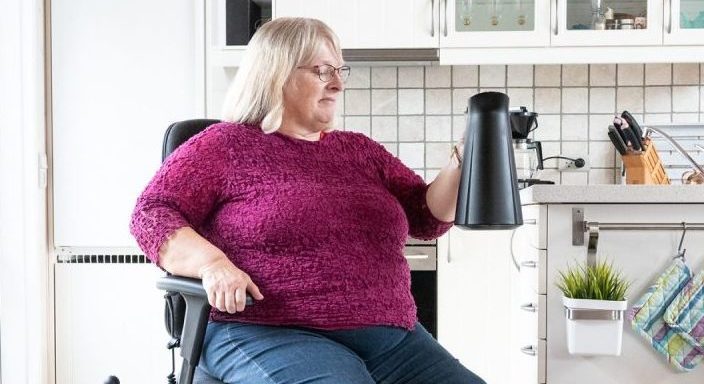
Many older people begin looking for walking aids for elderly when walking longer distances starts to feel tiring or less stable. A built-in seat can offer reassurance during outings, providing a place to rest if needed.
In many cases, the goal isn’t just to find a walking aid — it’s to understand what kind of support will make everyday life easier and safer.
Walking aids with seats can be helpful, but they are designed with a specific purpose in mind: supporting walking and allowing short breaks during outings.
Table of contents
What walking aids with seats are designed to do
A walking aid with a seat typically refers to a rollator — a wheeled walker with hand brakes and a small built-in seat.
Its primary function is to support walking over longer distances. The wheels allow smoother movement than traditional walkers, while the brakes provide control and stability when stopping.
The seat is not intended for extended sitting, but rather for short pauses during walks — for example during errands, appointments, or time spent outdoors.
This makes rollators especially useful in situations where:
- walking distance is the main challenge
- access to seating is limited
- frequent short breaks make it easier to stay active
In simple terms, a rollator is designed to make walking more manageable, not to support the full range of activities that make up daily life.
A different approach: Mobility support while seated
Some mobility solutions focus on supporting movement while seated rather than walking.
Instead of walking between tasks and then sitting down to rest, the user remains seated while moving safely around the home. This approach can reduce fatigue and make it easier to save energy for the entire day and complete everyday routines.
A walking chair can support activities such as cooking, preparing meals, organizing household items, or working at a table or desk. Because the user is already seated, there is less strain from repeated standing and sitting.
For many people, this creates a more comfortable rhythm for daily activities inside the home.
If you’re unsure what type of support would work best in your situation, speaking with a local dealer can help you understand the options and get guidance based on your daily routines.
Find nearest dealer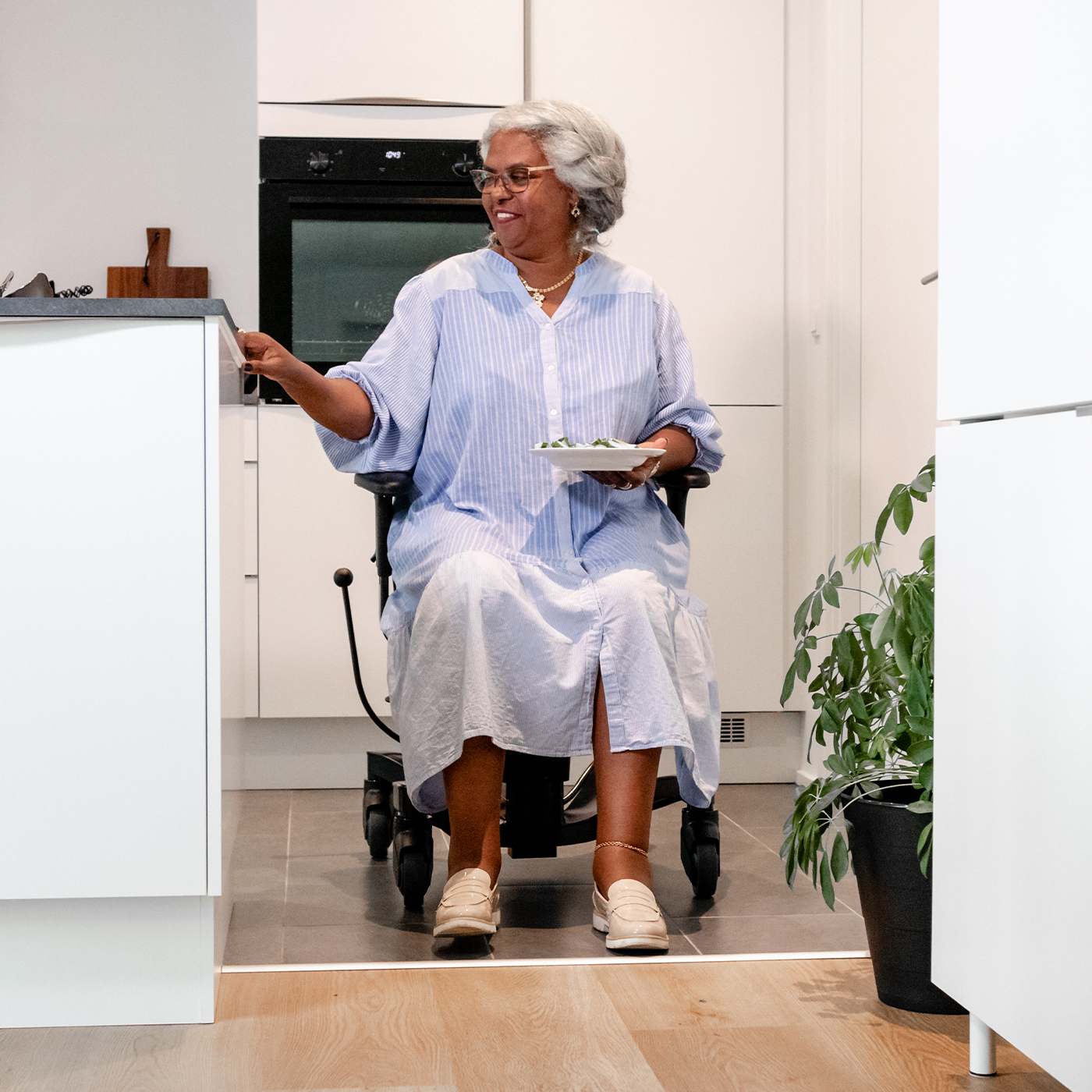
How a mobility chair like a VELA Chair supports daily independence
The VELA Chair represents this type of solution. It is designed specifically to support movement and activities inside the home while the user stays seated.
Unlike a rollator, which focuses on walking support, a mobility chair allows the user to move safely between rooms while seated. The chair’s rolling base enables gentle movement during everyday tasks and can move forward, backward, or sideways, for example when working at the kitchen counter. A central wheel lock secures the chair in place when sitting down, standing up, or whenever stability is needed.
The seat is designed to provide support during longer activities, whether that involves cooking, reading, hobbies, or relaxing.
One particularly useful feature is electric height adjustment. With the push of a button, the seat can be raised or lowered to match different situations throughout the day.
For example, the chair can be adjusted to align comfortably with a kitchen counter while cooking, lowered to match a dining table during meals, or raised slightly to support standing up safely.
Height adjustment can also help the user remain eye to eye during conversations, which many people find important in social situations. Being able to adjust seating height during a dinner or gathering can make it easier to stay engaged and comfortable.
If you’re curious whether this kind of chair could support your daily routines, you can explore options based on your specific needs.
Start chair quizWhen a walking aid with a seat may still be the right choice
Walking aids with seats remain a practical solution when the main challenge is walking longer distances outside the home.
For errands, appointments, travel, or outdoor walks, the rollator provides stability and the reassurance of a place to rest if needed.
Many people eventually discover that different types of mobility support serve different purposes. A walking aid may provide confidence during outings, while other solutions may offer better support for everyday activities inside the home.
Choosing support that fits everyday life
Mobility needs rarely revolve around a single situation. Walking outdoors, standing in the kitchen, moving between rooms, and sitting comfortably during meals all place different demands on the body.
Walking aids with seats can be helpful for stability and rest breaks during outings. At the same time, it can be useful to consider how mobility support fits into the activities that fill most of the day — particularly inside the home.
By understanding how different mobility solutions support different parts of daily life, older people and their families can make choices that help maintain comfort, independence, and participation in everyday routines.
If you’re considering different ways to support mobility at home, a local dealer can help you find a solution that fits your needs and guide you through the available options.
Find nearest dealerWho is a rollator suited for?
A rollator is suited for older adults who can still walk but need extra support and occasional rest breaks. It is especially helpful for people who experience fatigue during longer walks or feel less stable when walking outdoors.
When do elderly need a walking aid?
Elderly individuals may need a walking aid when walking becomes tiring, unsteady, or unpredictable. This often shows up as needing frequent breaks, feeling unsure on their feet, or avoiding outings due to fatigue or fear of falling.
What is a good walking aid for indoors?
For indoor use, a walking aid should support short movements, frequent sitting, and everyday activities. It should allow you to get close to counters and to adjust your position to different tasks. Traditional rollators can feel bulky inside the home and are not designed for tasks like cooking or navigating narrow pathways.
Solutions such as a VELA mobility chair are designed specifically for indoor use. They allow users to move safely while seated, reduce fatigue from standing, and provide stable support during daily activities like preparing meals or sitting at the table.
What are the pros and cons of a rollator?
Pros:
– Supports walking stability
– Allows rest breaks during outings
– Helps maintain independence outside the home
Cons:
– Designed mainly for outdoor walking
– Seat is not suitable for longer activities
– Can feel bulky in smaller indoor spaces
– Offers limited support for daily household tasksWhat can I use instead of a walker for an elderly person?
Instead of a walker, some people use mobility solutions that support movement while seated, especially for indoor use. These can help reduce fatigue during daily activities and make it easier to stay active at home.
What is the best walking aid for balance problems?
The best walking aid depends on where balance issues occur. For outdoor walking, a rollator can provide stability. For indoor situations, especially during daily activities, solutions that offer stable seating and controlled movement may provide better support.
Who should not use a rollator walker?
A rollator may not be suitable for individuals who are too unsteady or have difficulties using hand brakes. It may also be less helpful for those whose main challenges occur during standing activities at home rather than walking distances.
What are the problems of older people using a wheeled walker?
Some common challenges include:
– Difficulty using brakes safely
– Reduced control on uneven surfaces
– Limited usefulness inside the home
– Fatigue from continued standing during daily tasks
In many cases, the wheeled walker supports walking but does not address the broader challenges of everyday activities. In these cases, alternative solutions such as a mobility chair may be worth considering.